From answering to acting
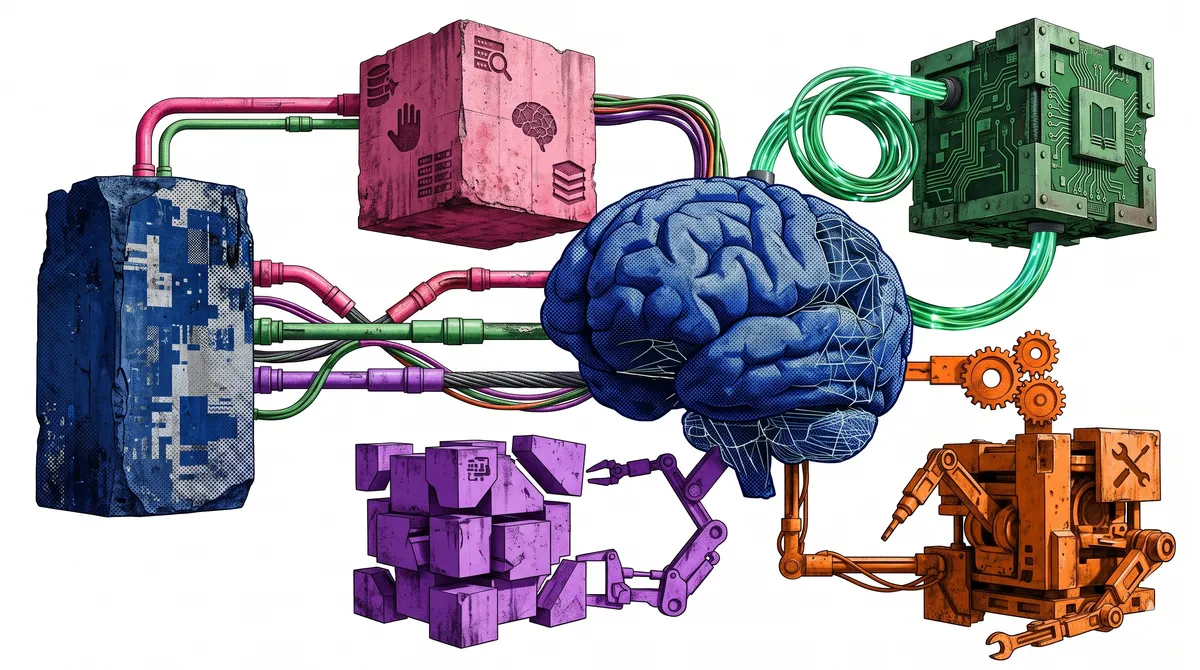
An AI agent is a system built around an LLM that doesn’t just produce text — it decides what to do next. Given a goal, the agent reasons about the steps, calls tools (search, code execution, APIs, databases), observes the results, and repeats the loop until the task is done.
The core idea is the reason → act → observe cycle. The model proposes an action, the system executes it, and the outcome is fed back into the model so it can adjust its plan. This turns a passive text generator into something that can complete multi-step work.
Building blocks
A practical agent usually combines:
- Tools / function calling — the bridge between the model and the real world.
- Memory — short-term context and long-term storage of past interactions.
- Planning — breaking a goal into smaller, ordered steps.
I build agents with frameworks like LangChain and orchestrate workflows with n8n, often pairing them with RAG so the agent can ground its decisions in real data.