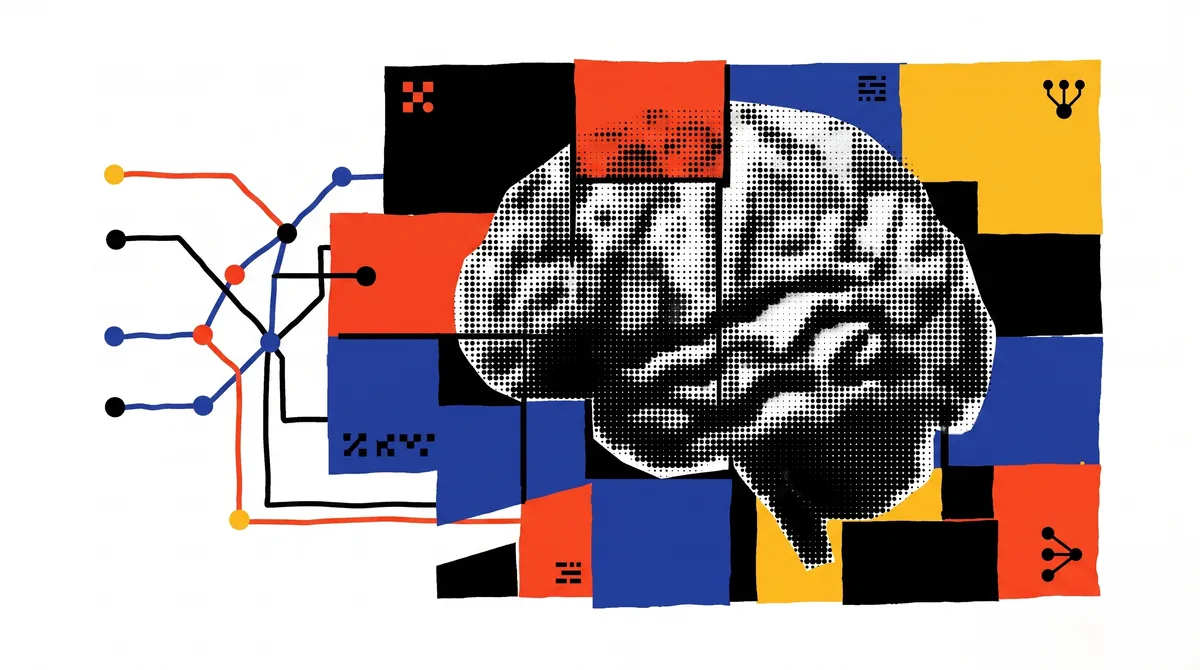
Large Language Models
A Large Language Model (LLM) is a neural network trained on enormous amounts of text to predict the next token in a sequence. From that deceptively simple objective emerges a surprising range of abilities: writing, summarizing, translating, answering questions and reasoning step by step.
Modern LLMs are based on the Transformer architecture and scaled to billions of parameters. They are first pre-trained on broad text corpora and then fine-tuned or aligned (for example with reinforcement learning from human feedback) so their answers are helpful and safe.
Why they matter
LLMs turned natural language into a programming interface. Instead of writing rigid rules, you describe what you want and the model produces it. This is what powers chat assistants, code generation, and the agents and RAG systems I build.
Their main limitations are that they can hallucinate facts and that their knowledge is frozen at training time — which is exactly why techniques like retrieval-augmented generation exist.