Retrieval-Augmented Generation
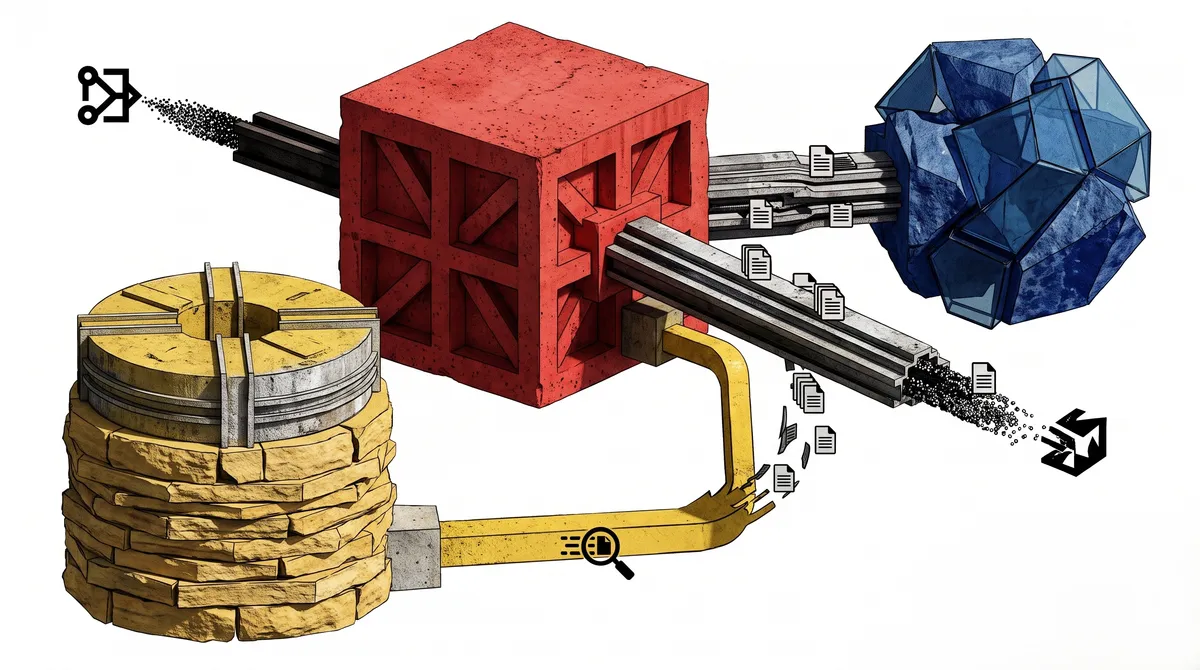
RAG (Retrieval-Augmented Generation) is a pattern that gives a language model access to external knowledge at answer time. Instead of relying only on what the model memorized during training, the system first retrieves the most relevant documents and then asks the LLM to generate an answer using them as context.
The typical pipeline has two stages:
- Retrieval — the user’s question is converted into an embedding and compared against a vector database to find the most similar chunks of text.
- Generation — those chunks are inserted into the prompt so the LLM answers grounded in real, current data.
Why use it
RAG solves two of the biggest weaknesses of LLMs: outdated knowledge and hallucinations. Because the answer is built from retrieved sources, it can stay up to date and even cite where the information came from.
In my own projects I use both classic RAG and Hybrid-RAG, which combines semantic (vector) search with keyword search to get the best of both worlds.